Overview of events marking his 90th birthday
Compiled by Karin Rõngelep and Nele Kivisild
In recent decades, Arvo Pärt’s music has attracted devoted performers and broad audiences in many parts of the world, across different cultural backgrounds. The scale of the celebrations marking the composer’s 90th birthday around the world in 2025 was testament to this. Festivals, exhibitions and other events were organised across a wide range of fields, while extensive media coverage reflected the continuing interest in his work. Unsurprisingly, the greatest number of concerts devoted to Pärt’s music took place in Europe, particularly in Germany, England and the Netherlands, as well as in North and South America. Concerts were also held in Turkey, China, Kuwait, Egypt, South Africa, Malaysia and the United Arab Emirates.
Premieres from the archive
Although Arvo Pärt has stepped back from active composition in recent years, three of his works received their premieres during the anniversary year, thanks to the Arvo Pärt Centre’s ongoing archival work.
Silouan’s Song, based on a text by St Silouan of Athos, has until now been performed in its version for chamber orchestra. In collaboration with Vox Clamantis, an arrangement for mixed choir a cappella was prepared, and its premiere at the Arvo Pärt Centre on 12 January 2025 provided a symbolic opening to the anniversary year. Writer Tõnu Õnnepalu reflected on the concert: “All the art involved is merely a kind of launch vehicle – forgive me the perhaps crude metaphor – carrying the true substance of the music, Arvo Pärt’s prayer and ours, upwards. If it succeeds. Up there are silence, stars and space. There is no longer any art there, no styles, ideas or theories, only that which no one knows what it is but from which, perhaps miraculously, even the most unbelieving among us may still derive some hope for life…” (Tõnu Õnnepalu, “Võib-olla Arvo Pärdi muusika ongi viimane”, Postimees, 16 January 2025, pp. 16–17)
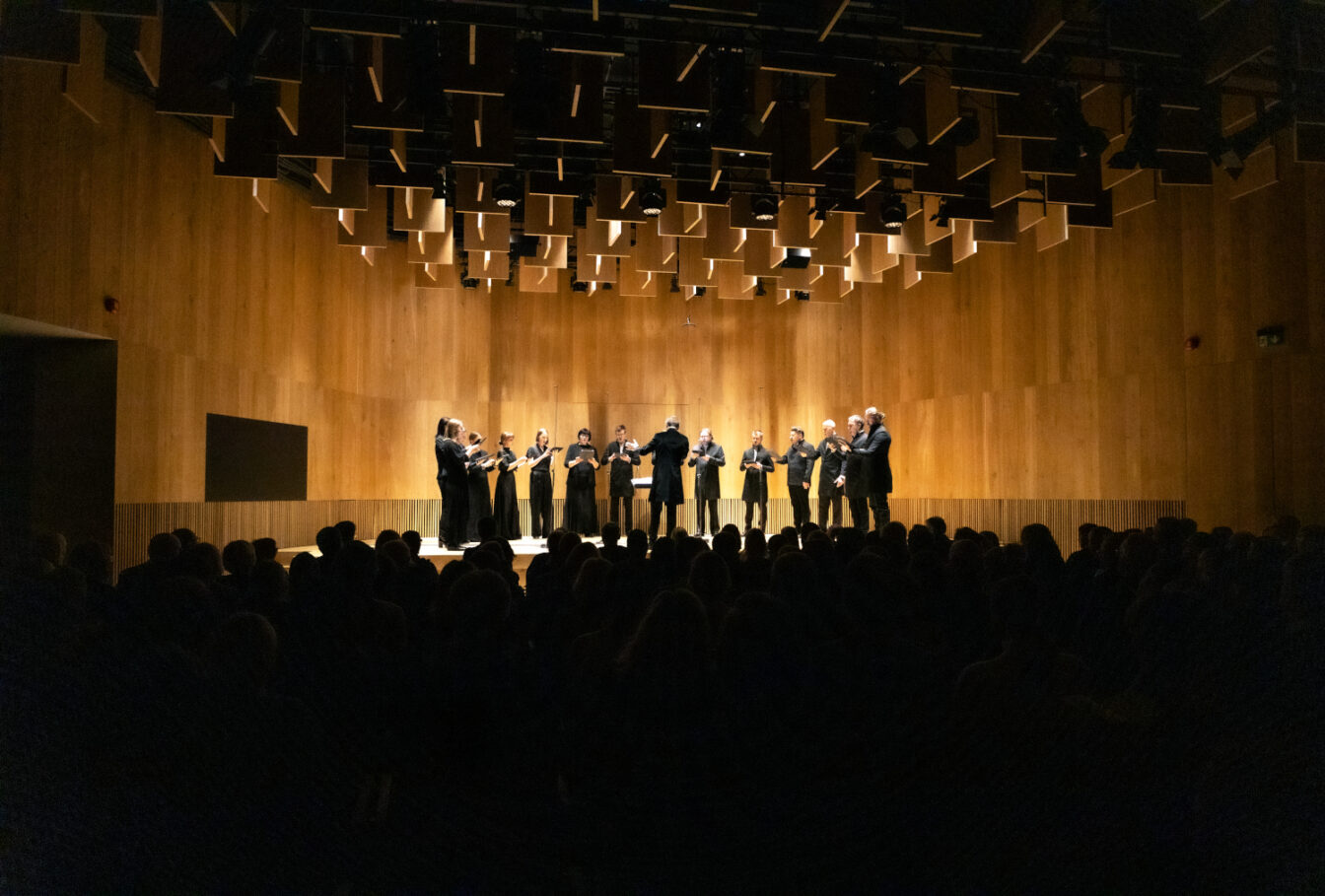
Photo: Birgit Püve
The second premiere was also given by Vox Clamantis under the direction of Jaan-Eik Tulve. On 4 May, the choral miniature Prayer to the Holy Trinity was performed before an audience for the first time at St Nicholas’ Church in Tallinn. Arvo Pärt wrote the piece in 1976 as a personal musical greeting to the then abbess of Kuremäe Convent. The work, which had until then existed only on manuscript paper, attracted the attention of the Arvo Pärt Centre’s staff while they were preparing the publication Gratefully. Heartfelt. With Love. Musical Greetings from Arvo Pärt.
During the anniversary year, Tauno Aints also prepared a new arrangement of Pärt’s youthful cantata Our Garden for children’s choir and symphony orchestra (1959), a work rarely performed because of the large forces it requires. The new version, for children’s choir and chamber ensemble, received its world premiere in Utrecht, the Netherlands, on 10 October. Performances followed in Oxford, Tartu, Pärnu and Tallinn.
Exhibitions, films, an academic conference and a birthday song
During the anniversary year, the Arvo Pärt Centre welcomed nearly 25,000 visitors from Estonia and elsewhere in Europe, as well as from more distant parts of the world, including Chile, Brazil, Argentina, Japan, China, South Korea and Australia. Nearly 1,000 children took part in the centre’s educational programmes during the year.
On 1 February, the centre opened its new permanent exhibition, Tintinnabuli: A World on Music Paper. The exhibition takes the form of an interactive book whose pages bring Pärt’s distinctive musical language, tintinnabuli, to life. Two tintinnabuli books, one in Estonian and one in English, are located in the centre’s library. By browsing them, visitors can explore the origins and essence of Arvo Pärt’s unique style in detail through descriptions, images, animations and soundscapes. The exhibition, presented in the form of a book, was created by Maarja Tyler, Kai Kutman and Kristina Kõrver, with archival input from Anneli Kivisiv.
Author Doris Kareva described the experience of the exhibition: “Some dreams are such that once you have seen them, you never forget them. It is as though a door into a chamber of reality had briefly opened, allowing you to glimpse the clarity and harmony within, the serene and majestic pillars of its laws and the shimmering dance of light flowing between them in every direction. I experienced something similar after closing the book Tintinnabuli: A World on Music Paper at the Arvo Pärt Centre, a new testimony to a spiritual journey that has touched so many.” (Doris Kareva, “Arvo Pärdi keskuse uus näitus on kui universumi hologramm”, Postimees, 6 February 2025)
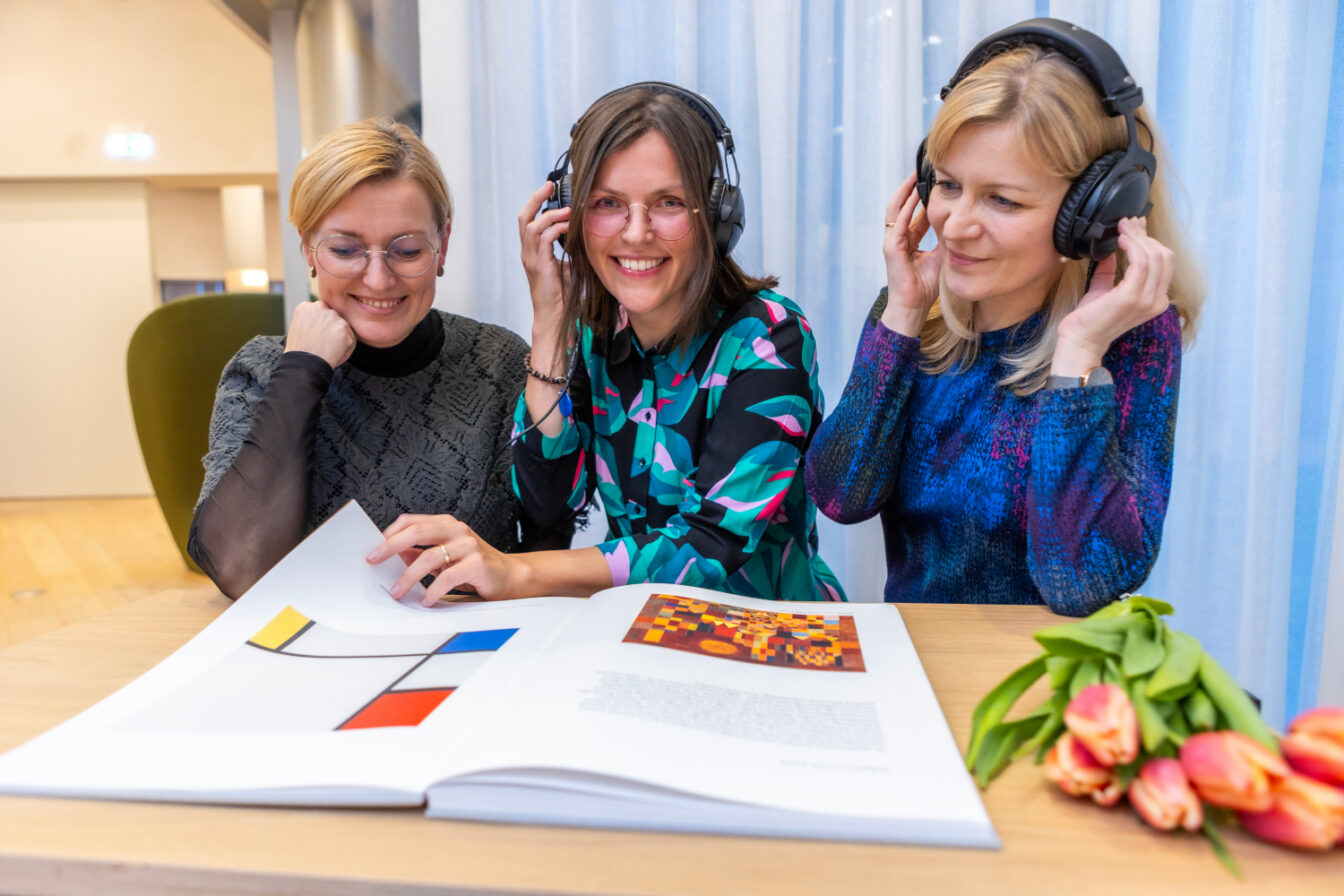
Photo: Birgit Püve
This year, the centre’s traditional Pärt & Film evenings focused on Pärt’s lesser-known original music for Estonian feature films, documentaries and puppet films from 1962–1978. Seven films were screened over three evenings, including From Evening until Morning (1962, directed by Leida Laius), Colourful Dreams (1974, directed by Virve Aruoja and Jaan Tooming), The White Land of Enderby (1969, directed by Andres Sööt and Mati Kask) and Ice State (1970, directed by Andres Sööt and Mati Kask), as well as eight puppet films, among them The Little Motor Scooter (1962, directed by Heino Pars), Just Like That (1963, directed by Elbert Tuganov), The Last Chimney Sweep (1964, directed by Elbert Tuganov) and Cameraman Kõps in Mushroom Land (1964, directed by Heino Pars).
In September, the month of Arvo Pärt’s birthday, the centre presented a new publication, the book-album Gratefully. Heartfelt. With Love. Musical Greetings from Arvo Pärt. It brings together 78 previously unknown musical miniatures by Arvo Pärt, composed over the decades as dedications to many of the composer’s friends and acquaintances. In these witty and characterful greetings, the composer used the musical notation of letters in names or the melody of Happy Birthday, presented both in notation and, in some cases, as recordings available on the Arvo Pärt Centre’s website.
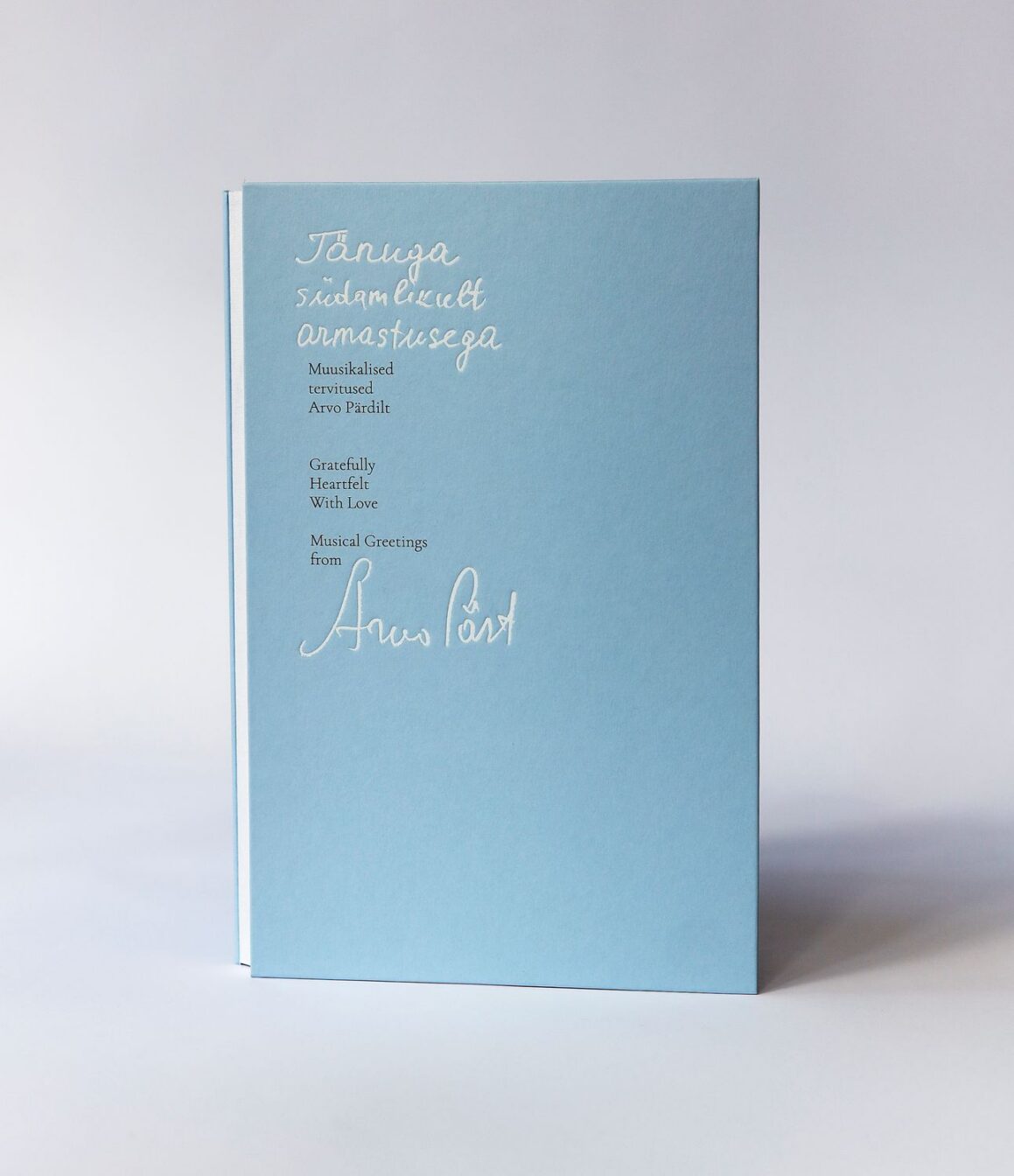
Photo: Birgit Püve
Composer Ardo Ran Varres analysed the collection: “A code or formula is a good example of how a composer sets limits for himself. Strict structural thinking, a mathematical framework, a certain serial quality and the beginnings of graphic notation could make excellent teaching material for a novice composer. The letters in the recipient’s name that correspond to note names are identified. The remaining letters become rests or are simply ignored. This immediately gives the composer material to play with, even if there is only a single pitch. Good old compositional techniques such as inversion, retrograde and others are then brought into play. The result is a distinctive musical imprint of a name. These greetings can also be viewed as sketches and studies for larger works. After all, every person is a masterpiece of nature.” (Ardo Ran Varres, “Arvo Pärdi muusikalistest viguritest sai intiimne raamat”, Postimees, 7 May 2026)
The collection grew out of archival research by Maarja Tyler, Karin Rõngelep and Ardo Västrik. The greetings were recorded by Maarja Tyler, the Tallinn Chamber Orchestra and Vox Clamantis. Thanks to Angelika Schneider’s thoughtful design, the publication was selected as one of Estonia’s 25 most beautiful books of 2025.
On 17–18 October, the Arvo Pärt Centre, in cooperation with the Estonian Academy of Music and Theatre, organised the international research conference Arvo Pärt: Ideascapes, bringing leading scholars from a range of fields to Laulasmaa from around the world. The keynote speaker on the first day was Christoph Wolff, the distinguished Bach and Mozart scholar and Professor Emeritus at Harvard University, whose lecture was entitled “Cultural Memory in Music: Reflections on Arvo Pärt’s Wenn Bach Bienen gezüchtet hätte…”. Papers were also presented by musicologists Leopold Brauneiss, Mark Tatlow, Kerri Kotta, Anu Veenre, Maarja Tyler and Toomas Siitan. The second day explored philosophical, semiotic and theological aspects of Pärt’s work and, more broadly, of creativity and the creative process. The keynote speaker was Eero Tarasti, professor at the University of Helsinki, distinguished musicologist and founder of existential semiotics. He was followed by theologian Peter Bouteneff, cultural semiotician Peeter Torop, cultural historian Marek Tamm, cultural journalist and essayist Joonas Hellerma, and musicologists Marie Antunes Serra and Kristina Kõrver.
Musicologist Gerhard Lock reflected on the conference: “I find myself in a paradoxical position when trying to perceive with both senses and soul the ‘One’ that Pärt seeks, because the intellect keeps asking how this ‘One’ can be so complex and so full of multiplicity. In any case, Pärt’s anniversary conference demonstrated, both in Estonia and internationally, the unifying power of Pärt’s music and ideascapes within musical culture and semiotics.” (Gerhard B. E. Lock, “Arvo Pärdi mõttemaastikud”, TMK, April 2026)
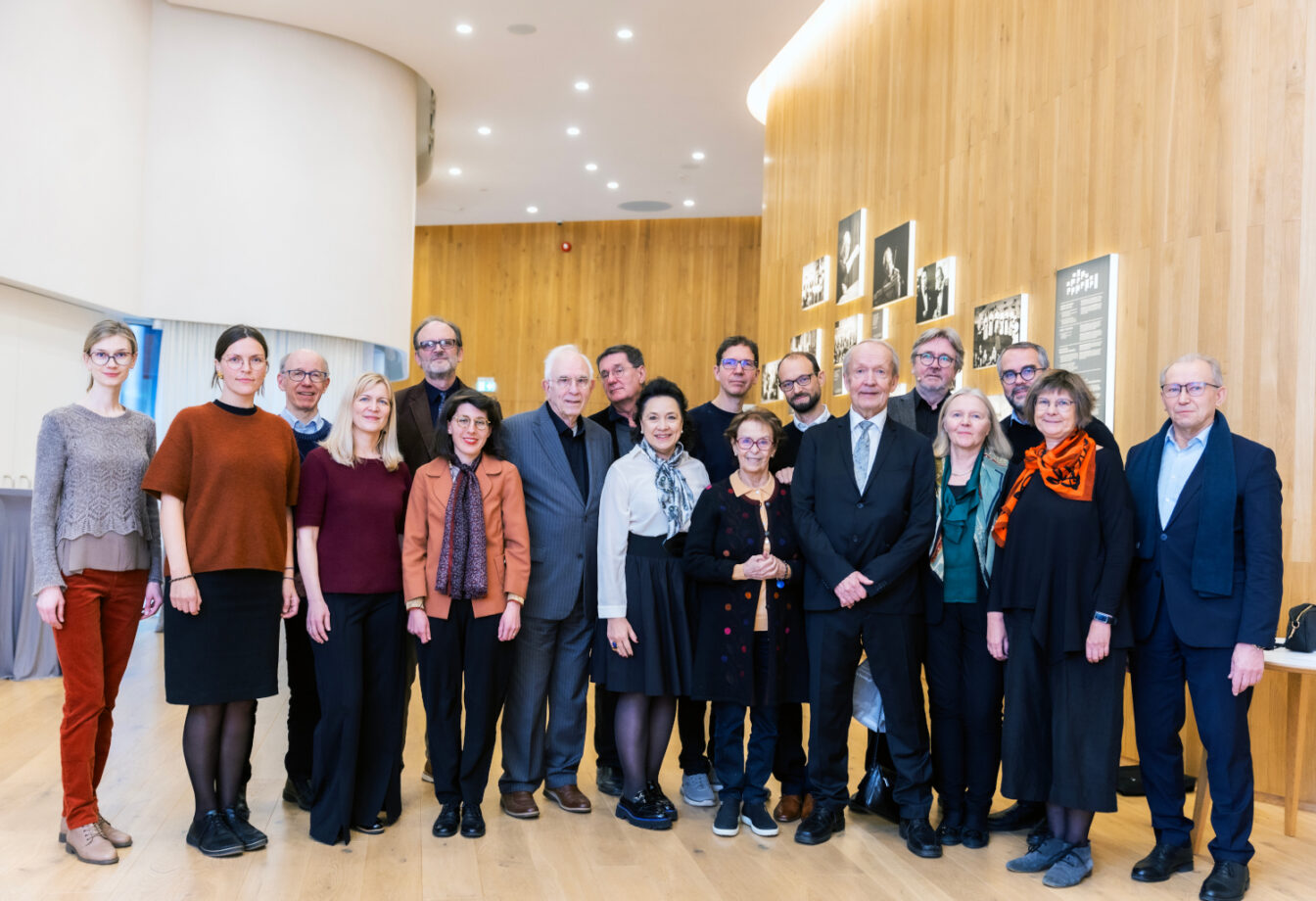
Photo: Birgit Püve
The Arvo Pärt Centre’s entire 2025/2026 concert season carried the spirit of the anniversary year. At the suggestion of programme director Riin Eensalu, almost every concert included at least one work by the composer whose birthday was being celebrated. One long-awaited highlight came on 29 November, when several distinguished interpreters of Pärt’s music and long-time companions of the composer gathered at the centre for Friends in Music. The programme featured some of Pärt’s best-loved chamber works, performed by cellist Anja Lechner, countertenor David James, organist Christopher Bowers-Broadbent, pianist Aleksei Ljubimov, mezzo-soprano Iris Oja, violinist Harry Traksmann, pianist Marrit Gerretz-Traksmann, the Tallinn Chamber Orchestra and conductor Tõnu Kaljuste. Reflecting on the concert, Annika Lõhmus wrote: “There has always been something paradoxical about performing Pärt’s music: outwardly it is simple, yet inwardly demanding. According to the performers, the secret of this music lies not in adding, but in letting go – letting go of unnecessary gestures, overly personal interpretation, even the sense of time.” (Annika Lõhmus, “Sõbrad muusikas: kummardus Arvo Pärdile tema 90. sünniaastal”, tko.ee, 2025)
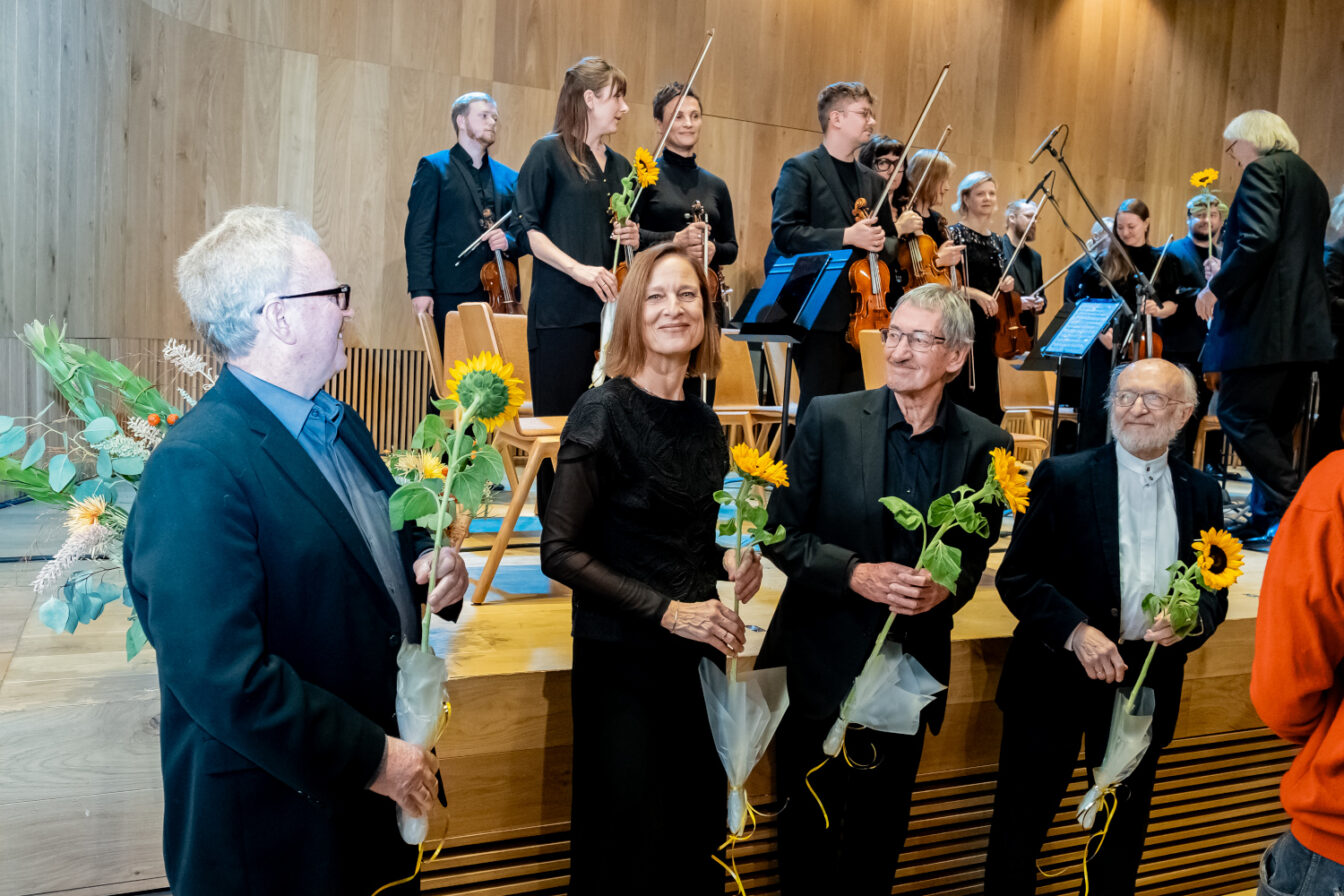
Photo: Aron Urb
Alongside concerts, the centre also offers an educational lecture programme. Special guest Archimandrite Petros Vryzas of the Monastery of St John the Baptist in Essex gave the lecture “My Strength Is Made Perfect in Weakness: The Path from Psychological to Ontological Repentance”. Other engaging speakers included composers Erkki-Sven Tüür and James MacMillan, and dramaturg Eero Epner. The centre’s librarian Toomas Schvak also received very positive feedback for his lecture on the books that have most influenced Arvo Pärt’s sense of the world and creative work.
The centre’s first travelling exhibition, The Formula of Love, explores the background to Arvo Pärt’s creative process and, for the first time, presents pages from his musical diaries to the public on a large scale. It opened in 2024 in Paide, the composer’s birthplace. During the anniversary year, the exhibition travelled widely: from Paide to Rakvere, where Pärt spent his school years, and then on to the Pärnu Music Festival, the Estonian Embassy in Brussels, the Flagey Festival in Brussels, Sindi Upper Secondary School, Oru Cultural Hall, Muziekgebouw in Amsterdam, the Sibelius Museum in Turku, the Oulu Festival, the Church of Our Lady in Copenhagen, the National Arts Centre in Ottawa and the Estonian Embassy in Ottawa, and the Cathedral of St John the Divine in New York. The exhibition was curated by Kai Kutman, Aile Tooming and Karin Rõngelep.
Passengers at Tallinn Airport had an unusual opportunity to celebrate Arvo Pärt’s birthday by playing Für Alina on the Estonia piano in the waiting area, where the score remained on the music stand throughout the year. In the airport’s pedestrian gallery, travellers could also view a display of Arvo Pärt quotations and events from the anniversary year.
During the anniversary year, the centre launched a story-collecting campaign connected with Pärt’s piano piece Für Alina, in preparation for a new exhibition marking the 50th anniversary of both Für Alina and the tintinnabuli style. People’s special listening experiences and personal stories will appear in the exhibition alongside manuscripts of the work, pianists’ interpretations and responses in other art forms.
On the morning of his birthday, 11 September, Arvo Pärt received congratulations from the centre’s staff, friends and musicians with cheerful dance steps and the greeting song I Am Already Big. The birthday video reached millions of people around the world through social media and the European Broadcasting Union (EBU).
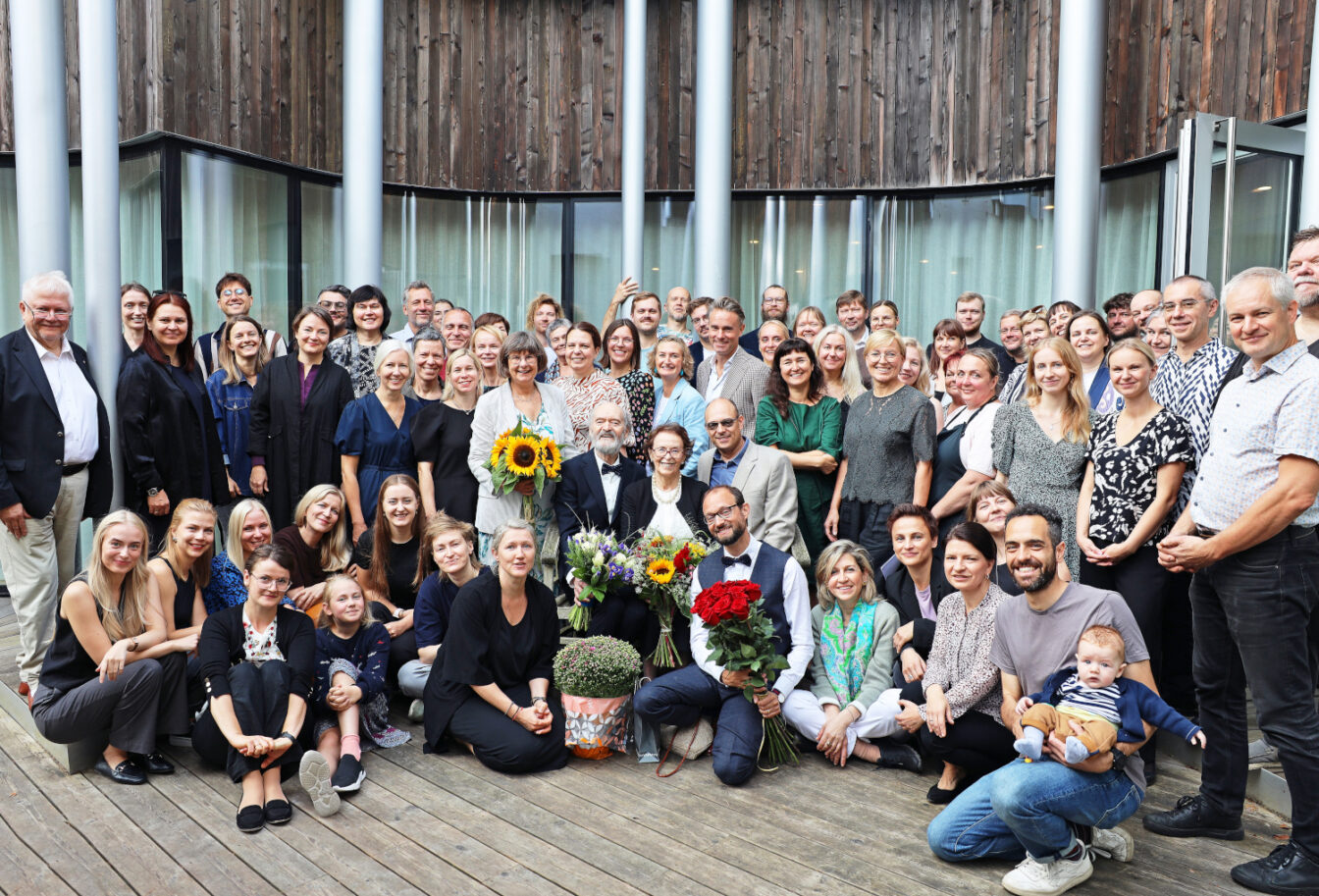
Photo: Birgit Püve
On his birthday, the composer also received numerous greetings by email, post and social media from admirers and friends of all ages. The children and staff of Kadaka Kindergarten sent their own interpretation of I Am Already Big.
All of Estonia celebrated
Arvo Pärt’s 90th birthday was enthusiastically celebrated by almost every Estonian musician and musical ensemble, while many other institutions also embraced the occasion wholeheartedly, including Kumu Art Museum, the Estonian Association of Designer Bookbinders, the Vanemuine ballet company and the National Song Celebration.
The Nargenfestival Pärt Days began in 2015 to mark the composer’s 75th birthday and has now taken place for fifteen consecutive years, always attracting large audiences. For the anniversary year, the festival’s artistic director Tõnu Kaljuste placed varied interpretations of the composer’s works at the heart of the programme. The 17 concerts of the Pärt Days in September, featuring nine different programmes, were held in churches and concert halls in Tallinn, Haapsalu, Narva, Viljandi, Laulasmaa, Tartu, Viimsi, Paide, Rakvere, Kuressaare, Kärdla and Rapla.
The Järvi family of conductors and the Pärnu Music Festival in July also paid a heartfelt tribute to Arvo Pärt. Paavo Järvi and the Estonian Festival Orchestra performed Cantus in Memory of Benjamin Britten, Silhouette, Fratres, Tabula rasa, La Sindone and Für Lennart in Memoriam. Together with pianist Kalle Randalu, the Estonian National Male Choir and the Ellerhein Girls’ Choir and Alumni Choir, they also performed the pivotal work Credo. Kristjan Järvi and Nordic Pulse presented an alternative programme, Arvo Pärt – Mirrored, inspired by Pärt’s music. During the festival, the Arvo Pärt Centre’s travelling exhibition The Formula of Love was on display at Pärnu Museum, while centre staff offered audiences insights into Pärt’s work and the activities of the centre in pre-concert talks.
In autumn, the Estonian Festival Orchestra embarked on a tour featuring Arvo Pärt’s music, opening at the Estonia Concert Hall in Tallinn. Performances followed at the Vienna Konzerthaus, Tonhalle Zürich and Hamburg Elbphilharmonie, before the tour concluded at Carnegie Hall in New York.
An extensive exhibition bringing together Estonian and German art, Spiegel im Spiegel: Encounters between Estonian and German Art from Lucas Cranach to Arvo Pärt and Gerhard Richter, featured archival material from the Arvo Pärt Centre. A selection of materials – the composer’s sketches, diagrams, musical diaries and manuscript scores – was curated by Kai Kutman. Nearly 140 works of Estonian art were displayed in total, with the creative dialogue between Arvo Pärt and the German painter Gerhard Richter forming the central axis of the exhibition. Pärt’s Spiegel im Spiegel and Richter’s series Doppelspiegel, dedicated to Arvo Pärt, also inspired the exhibition’s figurative title. The exhibition was open in the Great Hall at Kumu in Tallinn from 24 October to 12 April and at the Lipsiusbau in Dresden from 8 May to 31 August.
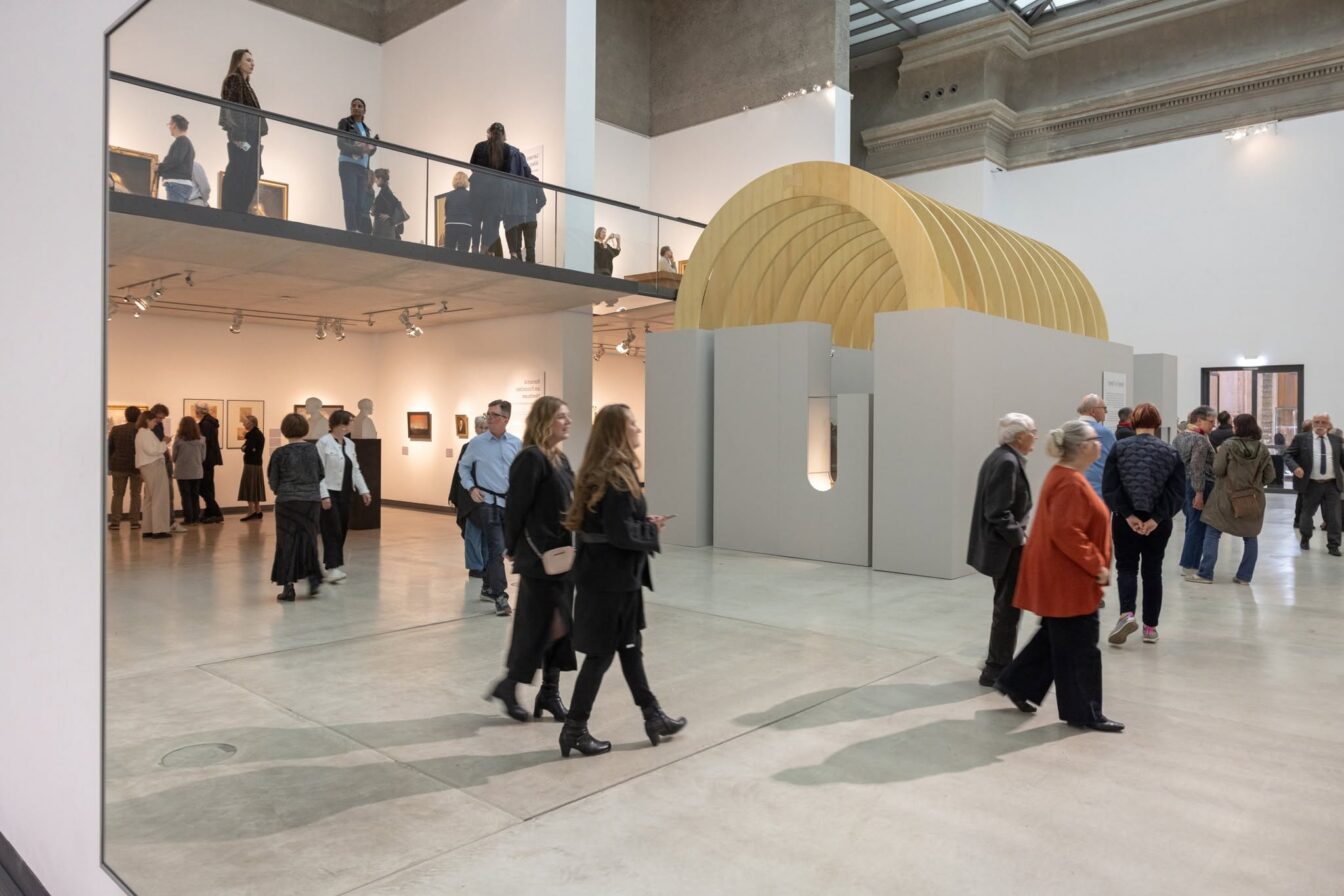
Photo: David Pinzer
The Estonian Association of Designer Bookbinders marked the composer’s 90th birthday with a Nordic and Baltic bookbinding competition whose task was to create a unique binding for the Arvo Pärt Centre publication In principio, a collection of texts used in Pärt’s works. An exhibition of the competition entries opened in the Great Guild Hall of the Estonian History Museum, and Kai Kutman spoke at a bookbinders’ seminar held at the Arvo Pärt Centre.
On 4 October, Czech choreographer Petr Zuska’s ballet A Little Prayer. Tribute to Arvo Pärt premiered at Vanemuine Theatre in Tartu, with Risto Joost as musical director. Featuring music from 17 works by Arvo Pärt, the production combines the expressive means of dance, music and spoken theatre to convey timeless themes that resonate with Pärt’s music. The ballet was also broadcast by Mezzo.
Throughout the season, audiences at Eesti Kontsert events were welcomed into the concert hall by the opening bars of Pärt’s Sieben Magnificat-Antiphonen.
At the 28th Estonian Song Celebration in 2025, a selection of women’s choirs performed Arvo Pärt’s Estonian Lullaby. On its journey to the Tallinn Song Festival Grounds, the Song and Dance Celebration flame reached Laulasmaa, where, as a tribute to the composer, it spent one night in the tower of the Arvo Pärt Centre.
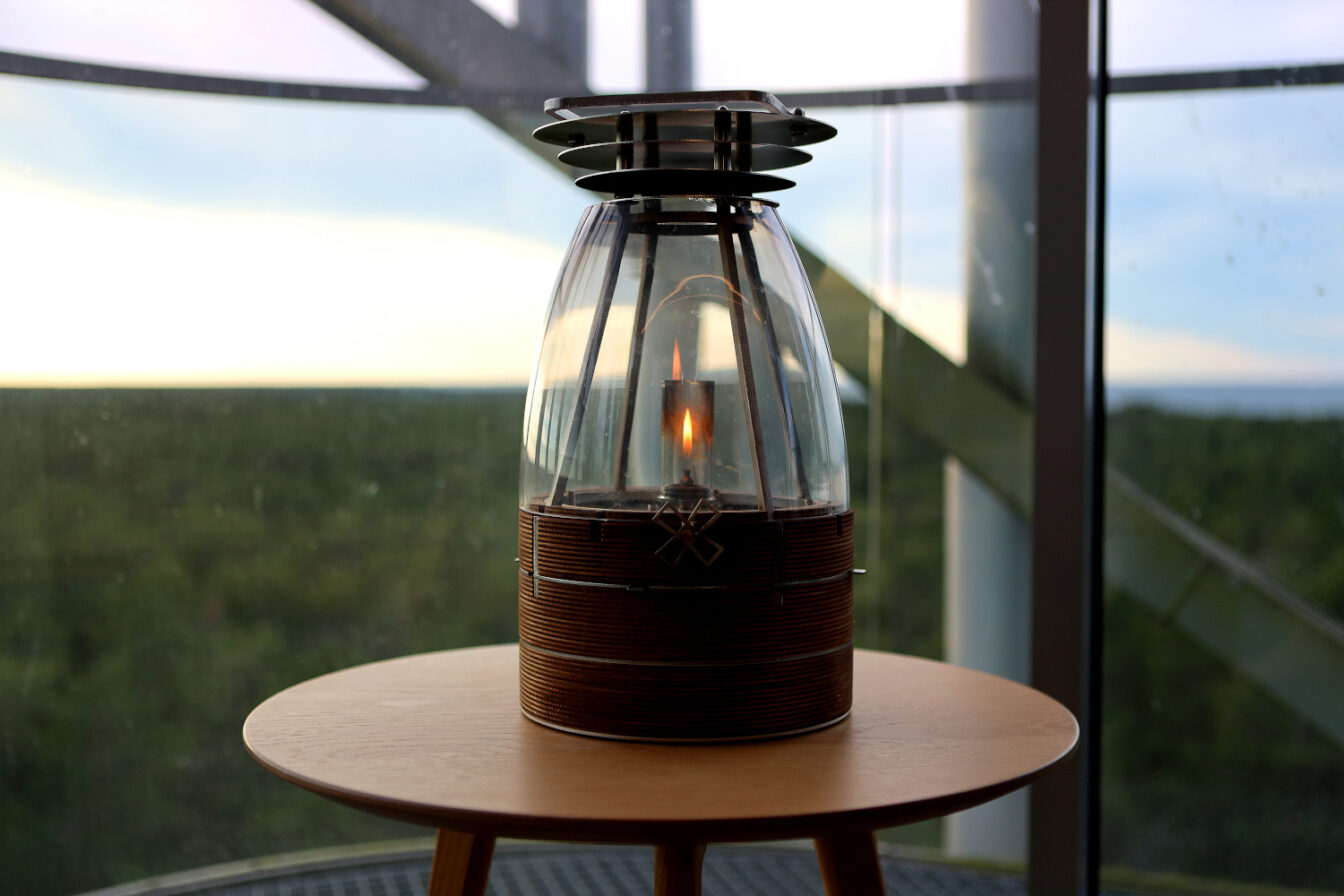
Photo: Birgit Püve
Arvo Pärt 90 on concert stages around the world
Leading concert organisations, smaller venues, orchestras and musicians around the world were keen to mark Arvo Pärt’s anniversary. The Arvo Pärt Centre counted 1,146 concerts featuring his works around the world in 2025, although the actual number was probably even higher.
The iconic Carnegie Hall in New York placed Arvo Pärt’s music at the centre of its 2025/2026 season, dedicating seven concerts to his work. Throughout the season, Pärt’s music was performed by internationally renowned musicians, including violinist Gidon Kremer, cellist Giedrė Dirvanauskaitė, pianist Georgijs Osokins, the Budapest Festival Orchestra conducted by Iván Fischer, and New York’s Ensemble Connect.
Arvo Pärt’s anniversary year culminated at Carnegie Hall with two concerts devoted to his music on 23 and 24 October, whose programmes were developed in cooperation with the Arvo Pärt Centre. The partnership with Carnegie Hall can be regarded as one of Estonia’s most significant cultural diplomacy initiatives of 2025, bringing major international attention and strong audience interest to Estonia’s leading ensembles and Arvo Pärt’s music. Estonian President Alar Karis and his wife also attended the New York events.
On 23 October, the Estonian Festival Orchestra performed in Carnegie Hall’s Stern Auditorium with violin soloists Midori and Hans Christian Aavik and pianist Nico Muhly, conducted by Paavo Järvi. The programme spanned several creative periods: the 1963 orchestral work Perpetuum mobile, the pivotal Credo (1968), the early tintinnabuli works Tabula rasa (1977) and Cantus in Memory of Benjamin Britten (1977), and later works, including Adam’s Lament, La Sindone and Swansong.
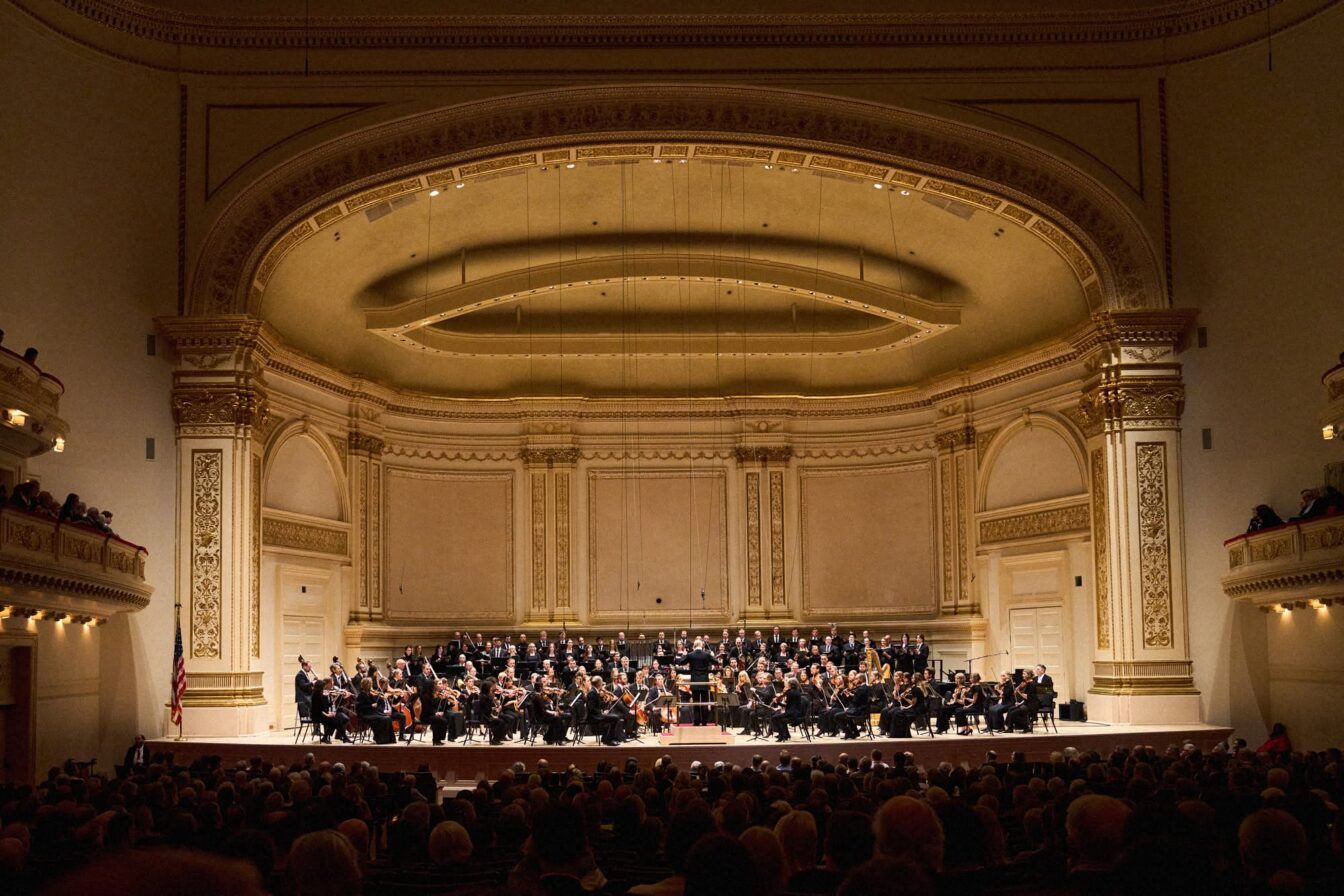
Photo: Kaupo Kikkas
Carnegie Hall’s executive and artistic director Clive Gillinson observed that “there are not many living composers in the world today who can sell out a 2,800-seat hall, but Pärt did”. (Eesti Päevaleht, 25 October 2026)
A review in The New York Times described the concert as follows: “Thursday’s concert was occasionally one of unbelievable extremes. Despite a large ensemble, including seven rows of first violins, the sound could be so quiet that it seemed to softly emerge from the walls rather than the instruments onstage. […] Pärt’s music requires not so much restraint as focus, and Jarvi’s colleagues channeled intense expression sometimes through just a single, held note. […] And sometimes, that breadth of feeling can come across within one work, like Tabula Rasa (1977), one of Pärt’s true masterpieces, which somehow hadn’t been performed at Carnegie until Thursday. […] As one of the solo violinists, Midori had remarkable bow control for a pure, singing tone even when the music was at its most glassy and still. The other soloist, Aavik, performed with sheer energy in the first movement and entrancing calm in the second. Never forced and always thoughtful in his articulation, he is a natural Pärt interpreter.” (Joshua Barone, “Arvo Pärt Gets the 90th Birthday Concert He Deserves”, The New York Times, 24 October 2025)
The concert on 24 October took place in Carnegie Hall’s more intimate Zankel Hall, where the Estonian Philharmonic Chamber Choir and Tallinn Chamber Orchestra under Tõnu Kaljuste presented a cross-section of Pärt’s major choral and chamber-orchestra works, including L’abbé Agathon, with Maria Listra as soloist, Stabat Mater and Te Deum.
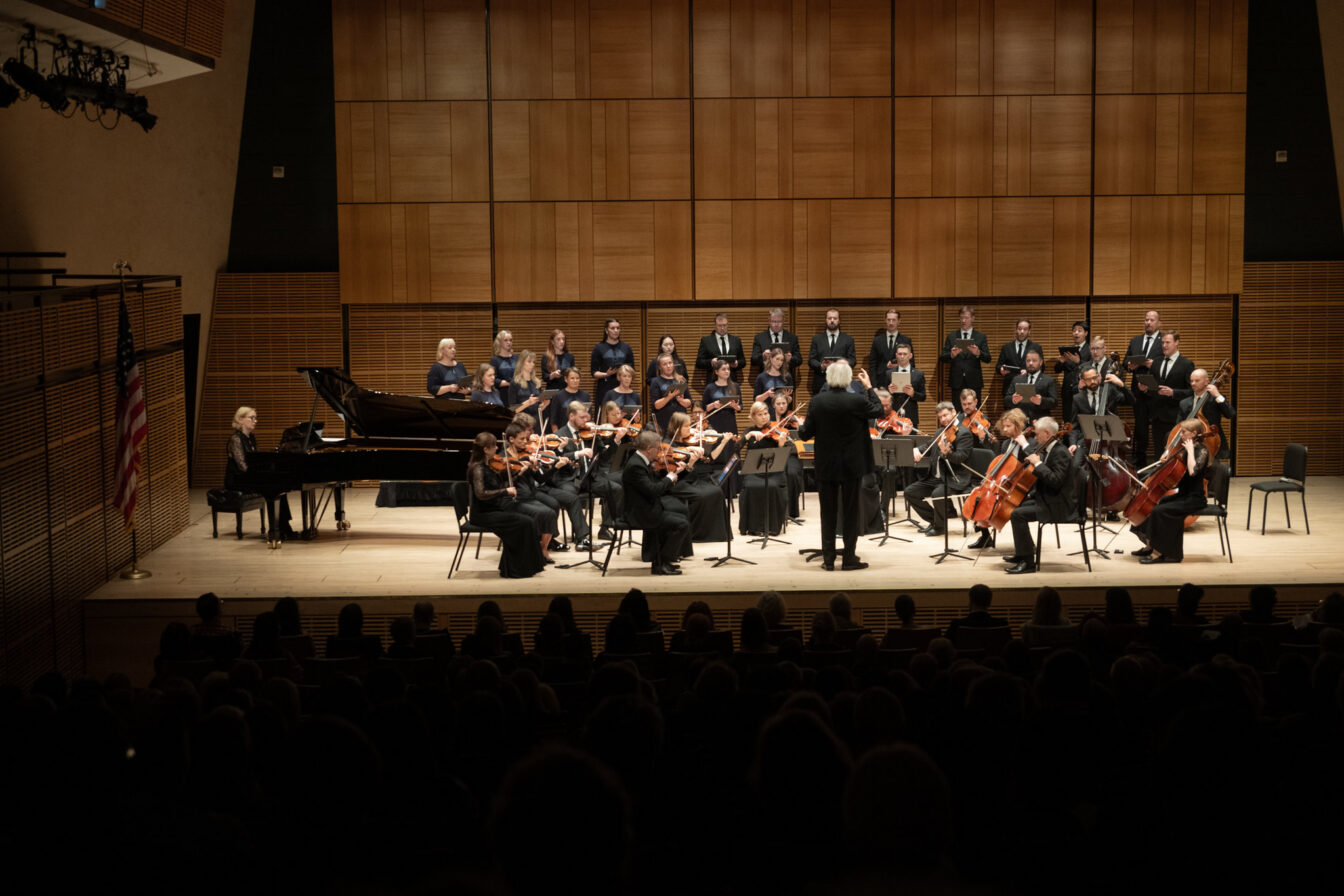
Photo: Kaupo Kikkas
Critic George Grella wrote of the performance: “[Magnificat and Te Deum] were exceptional all around, the playing so focused and immersive that the experience grew deeper and more gripping, note by note, until the musicians built something of their own sacred space inside Zankel. The combination of focused intonation in the strings and choir—plus the modest size of the ensemble—made it easy to pick out individual voices and their colors. Kaljuste’s ideal pacing and superb management of dynamics made these performances tremendously involving.” (George Grella, “Kaljuste, Estonians Mark Arvo Pärt at 90 with a Luminous Choral Tribute”, New York Classical Review, 25 October 2025)
In addition to the two concerts devoted to Pärt’s music, a special screening of Dorian Supin’s documentary Arvo Pärt: Even If I Lose Everything took place at Scandinavia House in New York on 25 October, followed by a panel discussion featuring US theologian and Pärt scholar Peter Bouteneff, composer David Lang and conductor Paavo Järvi.
The Flagey concert hall in Brussels organised an Arvo Pärt festival from 8 to 11 October, featuring no fewer than eleven concerts. The festival also opened Flagey’s 2025 concert season, whose overarching theme was spiritual resistance in today’s noisy and unsettled world. Pärt’s music was performed by Ars Nova Copenhagen, the British vocal ensemble VOCES8, the Flemish Radio Choir, Brussels Philharmonic and other distinguished performers. Estonian musicians included cellist Marcel Johannes Kits, pianists Sten Heinoja and Tähe-Lee Liiv, and kannel player Anna-Liisa Eller. The programme also included films and the exhibition The Formula of Love. Arvo Pärt Centre staff Riin Eensalu and Hele-Mai Poobus gave talks on Pärt’s music.
For the Estonian Philharmonic Chamber Choir, much of 2025 was spent touring the world under the sign of Arvo Pärt.
On 31 July, the choir performed a programme of music by Pärt and Tormis at one of the world’s oldest classical music festivals, the BBC Proms, in London’s Royal Albert Hall under Tõnu Kaljuste, before an audience of 5,000. Maarja Tyler’s article on Arvo Pärt appeared in both the festival magazine and the programme booklet for the choir’s BBC Proms concert.
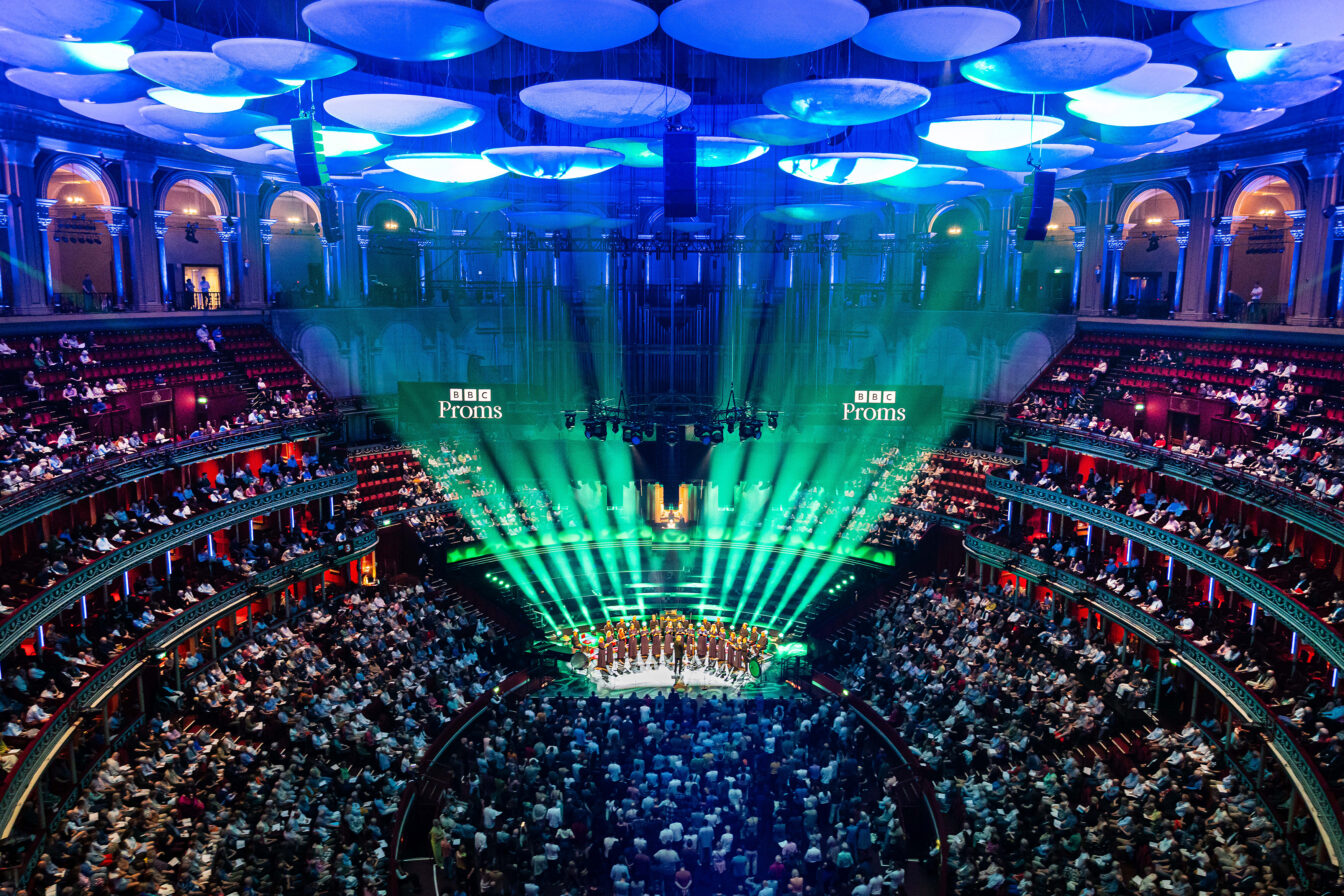
Photo: Anneli Ivaste
In addition to the Proms, audiences heard the Estonian Philharmonic Chamber Choir’s acclaimed Pärt sound at many other prestigious European venues, including the Philharmonie de Paris, Berlin Philharmonie, Rudolfinum in Prague, Barbican Hall in London and Glasgow City Halls, as well as Carnegie Hall in New York, elsewhere in North America and on tour in China. For the first time, the choir toured South America, where its programme included Adam’s Lament, conducted by Andres Kaljuste.
In London and New York, the choir performed together with the Tallinn Chamber Orchestra under Tõnu Kaljuste. On Arvo Pärt’s birthday, 11 September, the choir marked the occasion with a concert at the Lausitz Festival in Germany, broadcast live by Arte.
The festival Music at Oxford once again placed Pärt’s music in focus, this time under the title 90 Years of Arvo Pärt: A Reflection. From 11 to 16 November, ensembles from both the United Kingdom and Estonia took part, including The Carice Singers, conducted by George Parris, the Choir of Merton College, Oxford, Britten Sinfonia, Vox Clamantis and the M4gnet String Quartet with pianist Sten Heinoja.
The extensive accompanying programme included a screening of Dorian Supin’s documentary Arvo Pärt: 24 Preludes for a Fugue, followed by a conversation in which Michael Pärt, speaking with countertenor David James, offered insights into his father’s work. Kristina Kõrver and Maarja Tyler discussed the values and ideals underlying Pärt’s music and how they are translated into musical form, using his musical diaries and Spiegel im Spiegel as examples.
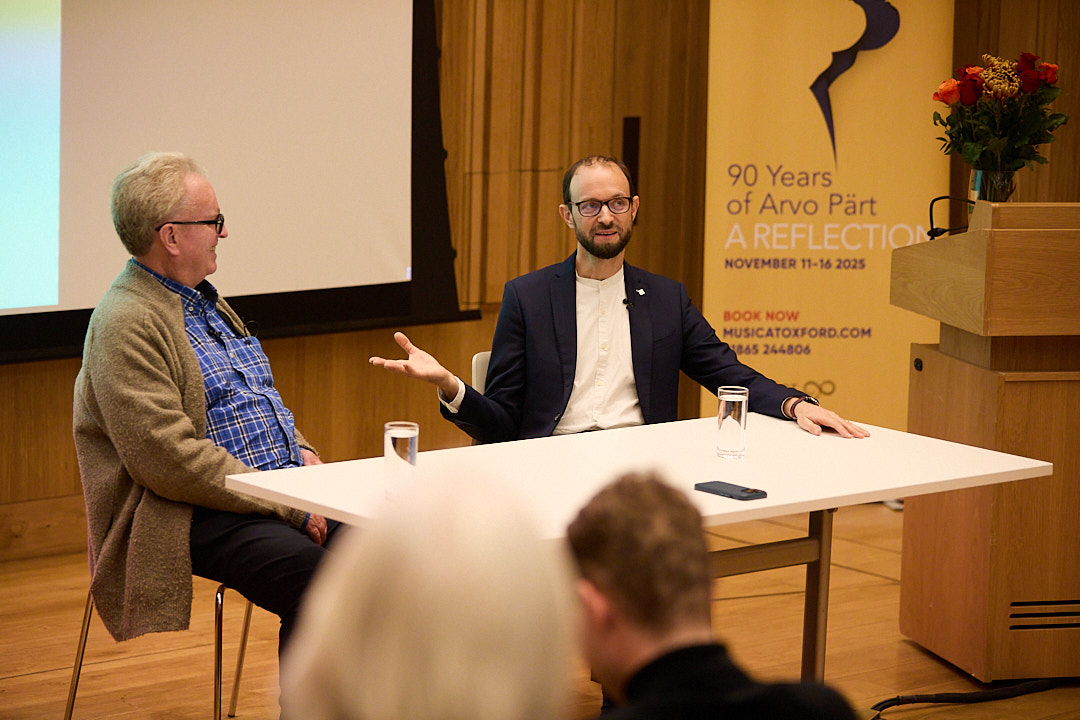
Photo: Tim Hand
At London’s Barbican Centre, Europe’s largest arts centre, Pärt’s music was in focus in October and November. Alongside the Estonian Philharmonic Chamber Choir and Tallinn Chamber Orchestra under Tõnu Kaljuste, his works were performed by The Carice Singers and conductor George Parris, 12 Ensemble, Koreless and GBSR Duo.
Hamburg’s Elbphilharmonie marked Arvo Pärt’s 90th birthday with four concerts featuring his orchestral, choral and organ works. Performers included organists Iveta Apkalna and George Herbert, Ensemble Resonanz and the Estonian Philharmonic Chamber Choir conducted by Tõnu Kaljuste, the Estonian Festival Orchestra conducted by Paavo Järvi, and Tenebrae under Nigel Short.
The Leipzig Gewandhaus appointed Arvo Pärt its Gewandhauskomponist for 2025–2027, meaning that his music will feature throughout two seasons. Works to be performed include Cantus in Memory of Benjamin Britten, Tabula rasa, An den Wassern zu Babel saßen wir und weinten, Spiegel im Spiegel and, in its German premiere, the chamber work Scala cromatica.
During Milan Design Week in April, visitors could experience Mother, a light installation created by acclaimed director and dramatist Robert Wilson. In the Sala dell’Ospedale Spagnolo at Sforza Castle, the work of three major figures in the arts came together: Michelangelo’s legendary Rondanini Pietà, the music of Arvo Pärt and Robert Wilson’s light art. Pärt’s Stabat Mater was performed by Vox Clamantis.
Artist Joonas Sildre also toured the United States, presenting his graphic novel Between Two Sounds in New York, Philadelphia, Washington, San Diego and Los Angeles.
At the Estonian Embassy in Brussels, the Estonian community celebrated Arvo Pärt’s birthday in September with a lecture by Karin Rõngelep on fan letters sent to the composer, alongside the exhibition The Formula of Love.
The celebrations marking Arvo Pärt’s 90th birthday continued with a variety of events until the composer turned 91 on 11 September 2026.
On 21 January 2026, the Educational Institute of the Swedish Church (Svenska kyrkan Utbildningsinstitut) in Uppsala hosted a day of theology and music dedicated to Arvo Pärt. Representatives of the Arvo Pärt Centre were in attendance: Michael Pärt, Aile Tooming, and Hele-Mai Poobus. Presentations explored Arvo Pärt’s spiritual quests in the 1960s and 1970s, the genesis of the work Kanon pokajanen, and the broader context of his oeuvre. The day concluded with a concert at Uppsala Cathedral, featuring the Uppsala Cathedral Choir conducted by Ulric Andersson and Robert Bennesh on the organ.
In April 2026, Out of Silence, a sound installation by Finnish interdisciplinary artist Hans Rosenström, curated by Alina Girshovich, opened at Franklin D. Roosevelt Four Freedoms State Park. Inspired by the music of Estonian composer Arvo Pärt and the minimalist architecture of Louis Kahn’s monument, the installation offered New Yorkers and visitors a moment of solace and reflection. Created in collaboration with the Estonian vocal ensemble Vox Clamantis, Out of Silence explored the power of the human voice — a sound that emerges from within and reaches outward, connecting with and permeating the space of another.
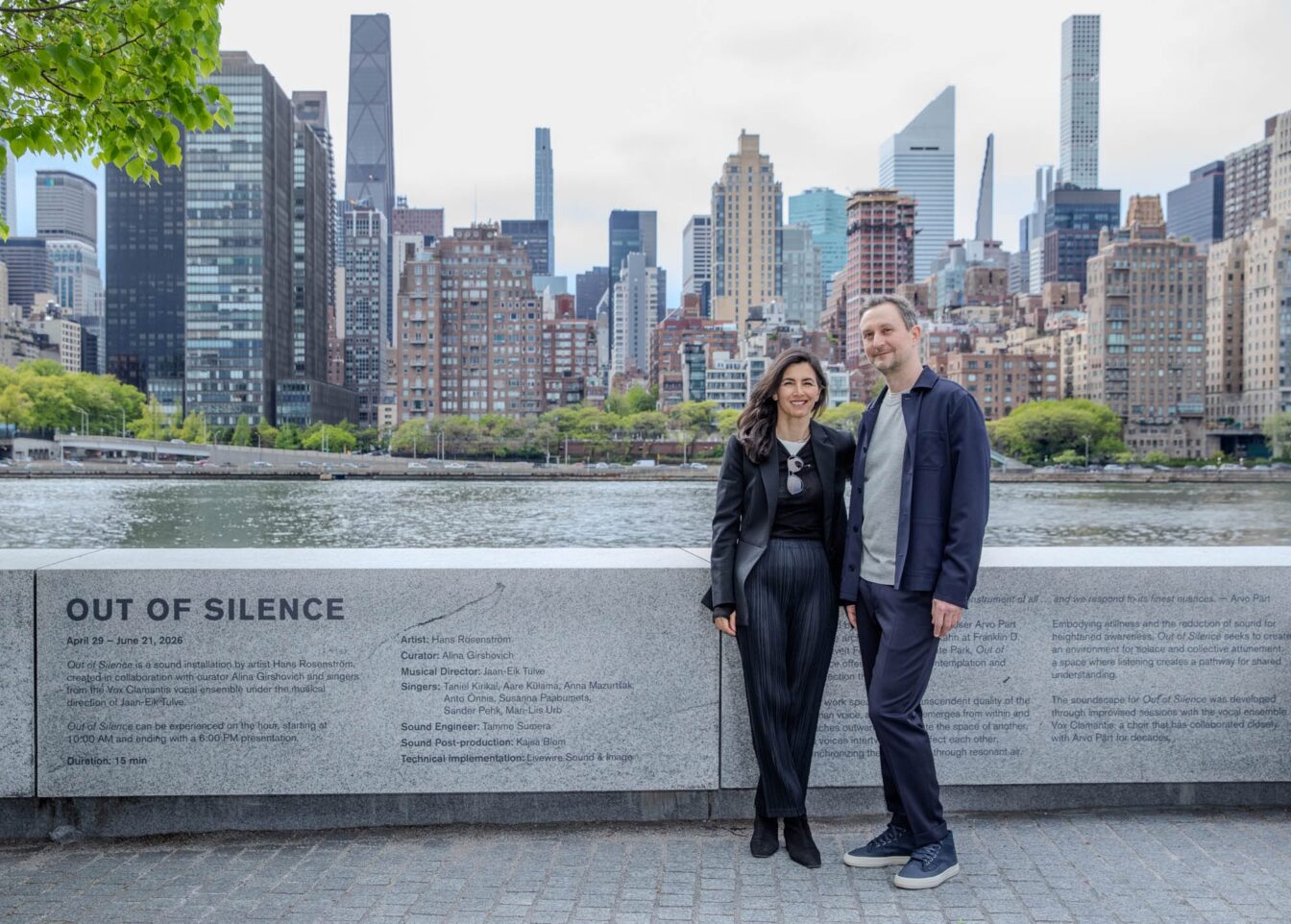
Photo: Eleri Ever
Six anniversary albums
According to conductor Tõnu Kaljuste, the idea behind recording … Lente (Berlin Classics, 2025) grew out of an interest in hearing different sonorities in Pärt’s music. The Estonian Philharmonic Chamber Choir is joined by Concerto Copenhagen, an orchestra playing on period Baroque instruments. Stabat Mater – with soloists Marie Roos, Danila Frantou and Toomas Tohert – is followed on the album by Festina lente, Trisagion, Silouan’s Song and Berliner Messe. The album was nominated for a 2025 Gramophone Award.
Vox Clamantis and conductor Jaan-Eik Tulve recorded Pärt’s a cappella choral music on the album And I Heard a Voice (ECM, 2025). Recorded in Haapsalu Cathedral and released around the composer’s birthday, the album demonstrates the continuing deepening of the relationship between choir and composer. It includes Nunc dimittis, O Holy Father Nicholas, Sieben Magnificat-Antiphonen, Für Jan van Eyck, Kleine Litanei and And I Heard a Voice….
Latvian pianist Georgijs Osokins released the album For Arvo (Deutsche Grammophon, 2025), a collection of Pärt’s piano works. The album also includes Osokins’s own piano transcriptions of Fratres and Lamentate. Fragile e conciliante. In October, a digital single of Hymn to a Great City was released, featuring Osokins with legendary pianist Martha Argerich.
The Estonian Festival Orchestra and conductor Paavo Järvi recorded the album Credo (Alpha Classics, 2025) during the Pärnu Music Festival. It includes Credo, with pianist Kalle Randalu, the Estonian National Male Choir and the Ellerhein Girls’ Choir and Alumni Choir, as well as La Sindone, Fratres, Swansong and Cantus in Memory of Benjamin Britten.
On Arvo Pärt’s birthday, 11 September, the Raschèr Saxophone Quartet released Words (un)Spoken (ERP, 2025), recorded at the Arvo Pärt Centre. The album includes two world-premiere recordings: Es sang vor langen Jahren and Nunc dimittis for nine saxophones, both arranged by Andreas van Zoelen.
In April 2025, a special double-vinyl edition of the album Tractus (ECM, 2023) was released. The recording brings together works by Arvo Pärt that blend the colours of choir and string orchestra. The album includes Littlemore Tractus, Greater Antiphons, Cantique des degrés, Sequentia, L’abbé Agathon, These Words…, Veni creator and Vater unser, performed by soprano Maria Listra, the Estonian Philharmonic Chamber Choir and the Tallinn Chamber Orchestra under Tõnu Kaljuste.
The Pärt anniversary year in the media
During the anniversary year, Arvo Pärt’s music also reached broader audiences through extensive international media coverage, including a BBC Radio 3 series, concert broadcasts on Mezzo TV, articles in The Guardian and The New York Times, a special programme on Estonia’s public television channel ETV, and series on the classical music station Klassikaraadio and the Russian-language station Raadio 4.
BBC Radio 3, the BBC’s classical music station, aired four programmes in its Composer of the Week series. The programmes were prepared with considerable depth and expertise and included Amelia Parker’s interviews with Michael Pärt, Maarja Tyler, Kristina Kõrver and Karin Rõngelep.
The classical music channel Mezzo marked Arvo Pärt’s anniversary in September with concert broadcasts and a film screening. On 11 September, Mezzo broadcast Georgijs Osokins’s concert recorded during the Pärt Days at the Arvo Pärt Centre. Its programme also included a recording of the Estonian Philharmonic Chamber Choir’s concert at the Prague Spring Festival on 19 May; a concert from the Pärnu Music Festival featuring the Estonian Festival Orchestra, Estonian National Male Choir, Ellerhein Girls’ Choir, Hans Christian Aavik and Mari Poll under Paavo Järvi; Robert Wilson’s production Adam’s Passion to music by Arvo Pärt, recorded at the Noblessner Foundry in Tallinn in 2015; and Günter Atteln’s 2015 documentary about Arvo Pärt, which also explores the production of Adam’s Passion.
German radio station SWR Kultur’s Treffpunkt Klassik devoted an entire themed week to Arvo Pärt.
ETV devoted a special programme to Arvo Pärt’s birthday, Out of Silence: Arvo Pärt, created by Joonas Hellerma.
In September, Klassikaraadio broadcast Miina Pärn’s three-part series Three Sounds, dedicated to Arvo Pärt. The first episode, Searching for Alina, focused on the first tintinnabuli work; the second, Musical Greetings, explored the centre’s new publication featuring previously unknown works by the composer; and the third, Spiritual Teachers, looked back at the composer’s spiritual quest.
Raadio 4 broadcast a six-part series on Arvo Pärt’s music, Maestro: Sound in Silence.
Postimees Nädal devoted a special supplement to Arvo Pärt’s 90th birthday, including interviews with Anu Kivilo, managing director of the Arvo Pärt Centre, and board member Michael Pärt.
More statistics
Countless ensembles and performers marked Arvo Pärt’s 90th birthday in 2025. In addition to all those mentioned above, they included conductor Paul Hillier, pianist Onutė Gražinytė, conductors Kristiina Poska and Daniel Reuss, the Estonian National Symphony Orchestra and conductor Olari Elts, the Estonian National Opera Symphony Orchestra and conductor Arvo Volmer, Voces Tallinn, the Suure-Jaani Music Festival, Collegium Musicale, Ukuaru Music House, the Pühalepa Festival, the VHK String Orchestra, the Irish Chamber Orchestra, Theatre of Voices, Tapiola Sinfonietta, Helsinki Music Centre, the Boston Symphony Orchestra, The Sixteen, Oulu Sinfonia, The Tallis Scholars, the RIAS Chamber Choir, Tenebrae, MDR Rundfunkchor, the Belgian National Orchestra, Brussels Philharmonic, the Iceland Symphony Orchestra, Britten Sinfonia, Cappella Amsterdam, the Latvian National Symphony Orchestra, the George Enescu International Festival in Bucharest, the Sansara and Kwintessens choirs, the Vienna Konzerthaus, Mozarteum Salzburg, Klarafestival, the Turku Music Festival, the Latvian Radio Choir, the Concertgebouw in Amsterdam, Vocal Ensemble Ludens, Music Centre De Bijloke, The Elysian Singers of London, Concerto Copenhagen, Neustadter Vokalensemble, the Budapest Festival Orchestra, and many others.
Historically, the most frequently performed works by Arvo Pärt have been the early tintinnabuli pieces Fratres, Spiegel im Spiegel, Für Alina and Cantus in Memory of Benjamin Britten. In recent years, however, Da pacem Domine (2004/2006), based on the text of an ancient prayer for peace, has risen to the top of the rankings. During the anniversary year, the centre counted 150 performances of the work around the world. Only Fratres, with 245 performances, was heard more often. These were followed by Magnificat (134), Spiegel im Spiegel (96) and Cantus in Memory of Benjamin Britten (90). Other frequently performed works included Nunc dimittis (70), The Deer’s Cry (69), Für Alina (68), Summa (55), Berliner Messe (53), Tabula rasa (45), Kanon pokajanen (45) and Adam’s Lament (26). Credo was performed more often than usual, with six performances, while the children’s cantata Our Garden was performed nine times, not only in Estonia but also in England, the Netherlands, Germany and the Czech Republic.
Recognition for the Arvo Pärt Centre
The Estonian Music Entrepreneurship Awards (EMEA) honoured the communications campaign for the Arvo Pärt 90 theme year with the Music Marketing and/or Communications Achievement of the Year award. The programme marking Arvo Pärt’s 90th birthday also received the Harju County Achievement of the Year 2025 award. The year-long celebrations marking Arvo Pärt’s 90th birthday were a collective effort, with every member of the team playing an important part in their success. Special thanks go to the centre’s Head of Communications, Nele Kivisild, Programme Manager Riin Eensalu, as well as Office Manager Indra Jõgis, Visitor Services Manager Anu Neutal, Partnerships Manager Sandra Perens, and Administration Manager Tiit Poller.